16 September 2026Q&A
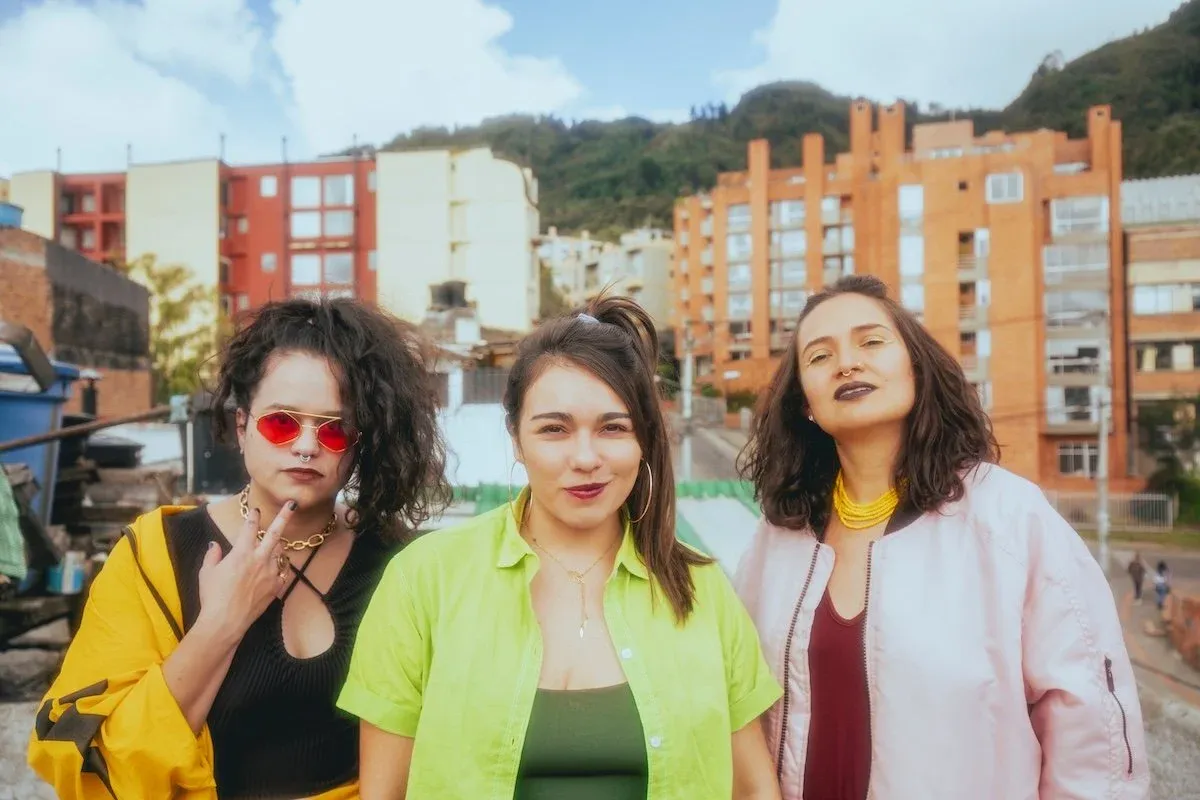
Winners of the acclaimed Festival de Ovejas, Bogotá trio La Perla merge traditional Colombian Caribbean rhythms with innovative contemporary sounds. Ahead of their first appearance in Australia as part of WOMADelaide 2026, the band discuss why they believe their music resonates with audiences across the globe, how their collaborative album with Pulcinella came about and what a La Perla live show encompasses.
Interview Tobias Handke // Image supplied
For those who don’t know much about La Perla, tell us who you are, how you came together and what you are all about.
La Perla is a percussive vocal trio born in Bogotá in 2014. We (Diana, Karen and Roberta) met each other at the bullerengue and gaita streets ruedas (types of dance) and through different festivals of these rhythms that are made in the Caribbean. We met for the common love that we have for this kind of music, and for all the culture and life that this music has and brings. Our style comes from the inspiration of the drums and chuanas (gaitas or indigenous instruments), but with a Bogotano and city sound.
La Perla merges traditional Colombian music and modern influences with a little South American and Caribbean thrown in for good measure. What inspires the band, and how would you best describe your sound?
We would say that our sound is explosive, tasty, street, tropical Bogotano and experimental. From the beginning, we have looked at the traditional music of the Colombian Caribbean, but also in the rhythms that resonate in the greater Caribbean. This added to the musical universe of each of us and our personal tastes and influence of urban music such as dancehall, rap, the chucu chucu, la champeta, salsa, punk, rock and more.
This has led us to experiment and try to make dialogue [between] these musical universes, looking for a sound of our own, singing about state violence, the resistance of people in the streets, the dignity of women, the Colombian countryside, the party, the friendship, the night, the city and more. All that brings us together and inspires us.
How has your relationship with Bogotá shaped the themes, stories, and energy behind your music?
Bogotá is a great cultural niche to which the traditional and popular music of Colombia arrives, and there is a constant boiling in the musical scene. Bogotá is a diverse city that brings together people from all over the country, has many stories to tell, faces and sounds. This city moves at an accelerated, rough pace – all of that permeates our songs, the narratives and the energy of our music.
Did you find it challenging to break through during the early days of the band, especially considering traditional Colombian music is a very male-dominated world, or were people open and accepting of what you were doing?
The love for the music of gaitas and drums, and bailes cantados (sung dance), led us from the beginning to search, study and practice with constancy. Then, despite some machista (macho) practices that undoubtedly surround this music, we had the character and ability to demonstrate through our performance the interpretative strength of women in these songs.
The band often address social injustice and political issues in its music. How important is it for you as a band to express your beliefs through song and raise awareness of the issues facing Colombians, particularly women?
Undoubtedly, music is a great channel to expose issues that should matter to us all as a society. In a country where human rights are violated, where the state kills, where violence against women’s bodies and femicide figures increase day by day, it is necessary to raise the voice, to be the voice of those who are silenced, of the collective feeling, of the need for justice.
Why do you think your music resonates with Western audiences who don’t speak or can’t understand Spanish?
The language of drums has a lot of strength and makes bodies vibrate. It speaks a universal language and has a great capacity to make people connect with themselves and with others. It is a great bridge to the feeling of freedom and joy. Our music resonates with people who recognise the proposal as something authentic, vibrant, who enjoy the rhythms, the strength of the drums, the songs, the chuana (gaita) and in general, the ensemble we have live.
Also, the music we have recorded and [our] collaborations with other artists have had a major impact on listeners – there are many people who listen to our music on platforms or who have met us at concerts that we have [played] in different countries despite not sharing the same language.
READ MORE: Rock Rebels on a Mission: Sarah McLeod & Dallas Frasca Bring Sustainability Centre Stage
The group won the top prize at the National Gaitas Festival in 2015. What did winning this award mean, especially as you were only the second all-female act to win?
Winning the Festival de Ovejas was very important for the group because it showed us the recognition and respect of the Ovejas community. It showed the [respect of the musical genre] gaita and our work, and that motivated us to keep playing together and to create music [inspired] by Bogotá women.
Since claiming the win, have you noticed more female-led bands and artists gaining recognition in Colombia, or is it still very male-dominated?
Definitely. The female presence in all music has been increasing, which is very positive, but there is still a long way to go for parity, visibility and recognition of work done by women.
Your 2018 single ‘Bruja’ featured in the Netflix show Siempre Bruja and has become somewhat of a feminist anthem. What are your thoughts on how the song has been received and the interpretation of the song from listeners?
It is a pleasant surprise that ‘Bruja’ has been so well received in musical groups and women’s collectives – many people from different places and ages listen to it and dance [to it and] have made it part of their repertoire, especially since it is sung accompanying the feminist struggle.
The band’s most recent record, Tatekieto, is a collaboration with the Toulouse quartet Pulcinella. How did this team-up come about, and what was the idea behind the record?
The PulciPerla project (Pulcinella & La Perla) started in 2019 in Bogotá thanks to the Jazztropicante Festival, which brings together musicians from Colombia and France for a collective creation. There were several meetings in France where we created and recorded the album. Tatekieto is the product of sharing these years and being able to find a unique and diverse language that was consolidated in this wonderful album.
La Perla are heading to Australia to perform at WOMADelaide 2026. What do you know about the festival, and how excited are you to perform at the event?
We are very excited because it is our first time on this continent. And WOMADelaide is a world-renowned festival which has brought many artists from various countries of the world, so we are honoured to represent Colombia and the independent music of Bogotá.
What can fans expect from a La Perla live show?
In our show, we take a journey of our first compositions as ‘Paren la Bulla’ and ‘Anawana’, which put all the hips to dance; we go through powerful songs like ‘Bruja y Guayabo’, and we show the compositions of Callejera, our LP, in which we use rhythms like samba, cumbia chicha, cumbia rebajada and a lot of improvisation.
Is there anything you hope to do or experience while in Australia?
We know that in Australia, people’s bond with nature is very strong, so knowing its diversity and unique animals would be very special. Also, the importance of free time as a constructive activity, as we know that people enjoy concerts a lot, so experiencing the connection with the audience excites us very much.
What does 2026 hold for La Perla? Can we expect a new album?
We are working on an EP of four songs, the first, ‘Guarachar’, will be released on December 12, and we will start 2026 with the other three songs. Additionally, we are working on a new album, which we hope to [release] by the end of 2026.
Catch La Perla performing at WOMADelaide on Friday 6 and Sunday 8 March 2026. Tickets on sale now via womadelaide.com.au.
Get the best of The Note in your inbox.