22 September 2026Guides
Welsh-Australian great Gwyn Ashton opens up about his early days as a young musician, working with Deep Purple's Don Airey and his new single 'Sugar Rush'.
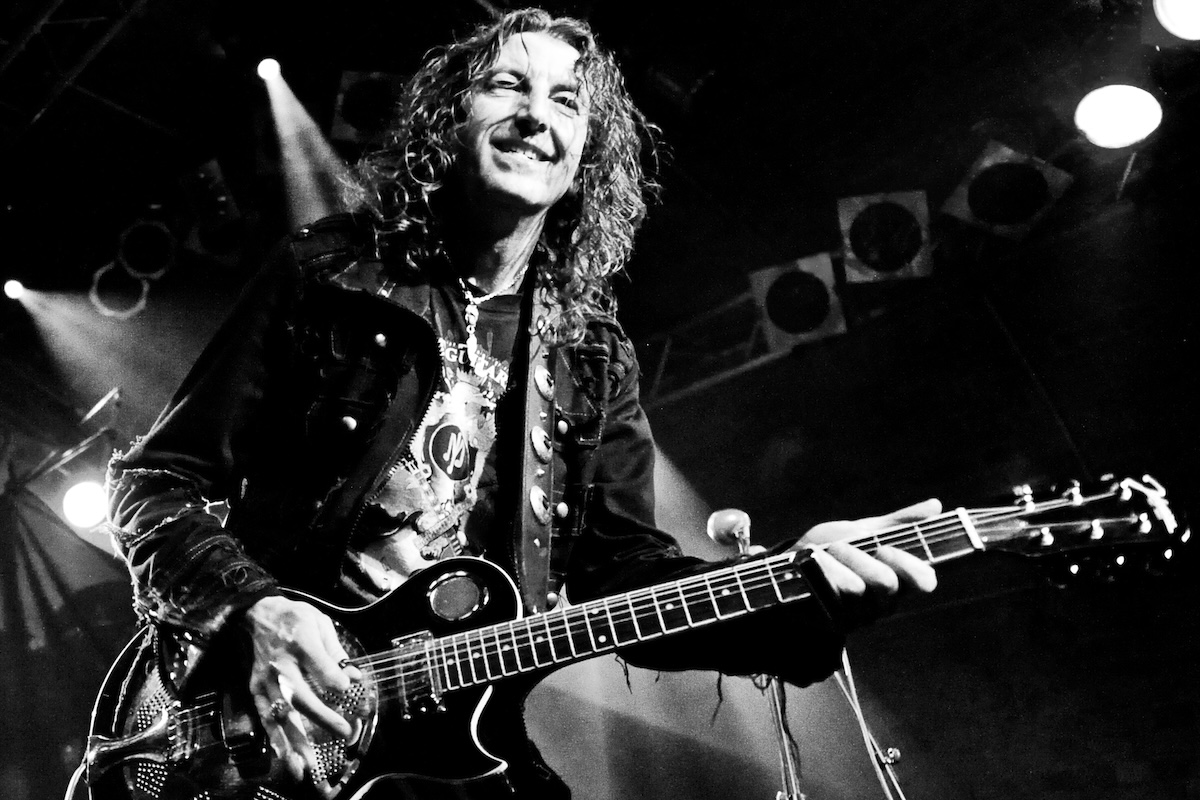
Gwyn Ashton is one of Australia's most accomplished and respected musicians.
Born in Wales and raised in South Australia, Ashton began playing guitar at age 12 and was performing in pubs by the time he hit 16.
He soon found himself performing with the likes of Swanee and Stevie Wright, going on to start his own band while in Sydney before moving to Melbourne and establishing himself as not only a gun guitar player but a compelling live performer.
Across a career spanning more than 50 years, Ashton has performed all over the world, collaborated with everyone from Mick Taylor to Jim Keays and released 10 studio albums, including last year's acclaimed Grease Bucket.
Currently in Australia on an extensive national tour, Ashton spoke with The Note about his early days as a young musician, working with Deep Purple's Don Airey and his new single 'Sugar Rush'.
Going back to the beginning, what are your earliest memories of music and wanting to become a musician?
My earliest memories of music were in Wales when I was about three years old. I saw Freddie and The Dreamers on the BBC and thought they were funny. At 12 years old I listened to the radio when I lived in Whyalla. In those days, 1972, nearly everything on the radio was guitar-oriented. I discovered The Beatles then, but they'd broken up a couple of years before and all the kids at school were into T Rex, Slade, The Sweet and so on. This made me want a guitar, and my mother bought me a cheap acoustic that I went nuts on before school, after school and after dinner, every day!
You mention discovering The Beatles; what other artists did you listen to as a youngster that influenced the way you play?
George Harrison, Chuck Berry and Hank Marvin were my first musical mentors. As I kept playing and joining bands, my road-education process introduced me to Jimi Hendrix, CCR, The Yardbirds, Cream, early ZZ Top, Rory Gallagher and Johnny Winter – some of these I'm lucky enough to have toured, played and recorded with.
The Bluesbreakers album with Eric Clapton was my next pivotal album rebirth. It's one of those albums that redefined blues guitar for me. There have been several after that. I discovered that album the day after my first introduction to the blues.
In 1977, a friend took me to see Adelaide blues band Smokestack Lightning play at the Pump House Hotel, Aldgate. That night changed my life, and the next morning I went record shopping and discovered that album. Then I discovered local Adelaide artists such as Chris Finnen and Mickey Finn. Chris and I have recorded two albums together now. We met in 1978 and have been friends since then.
What was the Adelaide music scene like when you were first starting? How does it compare to now?
There were more bands then and more venues that you could play at. I've always loved Adelaide but then you could play rock and blues music in city, suburban and Hills pubs and you'd get 200-600 people a night. It's changed a lot with solo and duo artists doing cover shows in pubs now, not a patch on the loud rock 'n' roll vibe from before, but there are still a few great bands in town, and they're all struggling for the same handful of gigs. Thank goodness venues like The Gov, The Wheaty, Three Brother Arms, Beach House Cafe and Murray Delta Juke Joint exist! A lot of pubs got hurt by the introduction of the pokies and COVID didn't help, either.
People talk about the Australian music scene as being pretty wild during the '80s. What are your memories of that time? Any crazy gigs that stand out?
There were venues like The Richmond Hotel, where I first saw Mickey Finn play and the night I first met Chris Finnen. Finn's frontman Uncle would hang upside-down from the rafters, blowing really cool blues harp. They evolved out of the band Fraternity that Bon Scott fronted, then when he joined AC/DC, Jim Barnes sang for them pre-Cold Chisel.
The Tivoli, The Findon, The Reepham, The Alma, Blue Gums, Pooraka, Larggs Pier – a multitude of gigs where you'd see some serious rock 'n' roll take place. Then I got an offer and moved to Sydney to join a band there in 1983. In 1985 I played with Swanee, and we played on Countdown. 1986, I joined Stevie Wright's band. Then in the '90s, I moved to Melbourne, made my first album and played on two of Jim Keays' solo albums: Pressure Makes Diamonds and Resonator (2004).
You've played many different styles of music over your career, but most people associate you with the blues. What is it about this genre that hooked you in?
The blues is raw and dangerous. It's life put into song. It's a genre that is basic human instinct and primal. Anyone can tap their toes to it, dance or sit back and enjoy. It's the roots of modern music, simplistic in form but extremely difficult to get right.
READ MORE: Nathan Cavaleri: From Demons to Miracles
What are your thoughts on the modern blues scene? Are there any artists that stand out?
Well, here in Adelaide we have some great blues bands. Chris Finnen is still around. There are bands like The Streamliners, Lazy Eye, 63 Deluxe, Cal Williams Jr and more! Internationally, I’m really into GA-20, Gary Clarke Jr and I still like the North Mississippi Allstars, The Black Keys, Jack White, Ry Cooder, etc.
During the early stages of your career, you played in Stevie Wright's band, Swanee's band and with Jim Keays. What did you learn from those three, and how much fun was that period of your life?
Those were great days. I was finding my feet. The experiences threw me into a professional environment, and I really had to get my act together. It was all pretty high pressure, and I'm glad I had those opportunities to see how to run a band and what the bandleaders expect from the musicians.
You've worked with some of the biggest names in the music industry. Have you ever been starstruck by an artist?
Not really starstruck. Everyone seemed down to earth to me. Sometimes it's hard to know what to talk about without coming across as a fanboy, though! Even though I've played with a lot of my heroes, there's usually a feeling of camaraderie and humour backstage or wherever I've met them. Whether it's Francis Rossi, Peter Green, Mick Taylor or anyone else. They've always been complimentary of my playing and songs.'Are there any artists you’re yet to work with but would love to write a song with?
All my heroes are dead, which makes it hard! Maybe Jackson Browne or Taj Mahal. I find songwriting to be personal and tend to write alone – saying that I'm co-writing with 8 Ball in Queensland, Tony Mitchell (Sherbet) in Sydney and Garry Allen in Melbourne.
For those unfamiliar with your career, what one song or album would you recommend they listen to so they can get an understanding of what you’re all about?
I'm old-fashioned and look at an album having an identity, with all the songs belonging to the same collection. There's an art in album sequencing! I vary a bit between albums, with some things being a bit folky, country, bluesy and heavy rock. It's hard to put it all into one album to get a true definition of what I do. Maybe Mojosoul, but that's an acoustic album and only a part of what I do. I recommend that anyone buy all of them!
Your most recent album, 2025's Grease Bucket, is a classic slice of blues-infused rock featuring Icehouse drummer Paul Wheeler. How did you first meet Paul and why did you choose him to collaborate with?
Paul and I played together about 10 years ago in Wollongong. Bassist Harry Brus introduced us and we got along really well. When the lockdown happened, I got stuck in Adelaide and someone told me that Paul was living here, so I got his number and called him up. We were both keen to work with each other anyway, so circumstances made it happen.
I had a big backlog of songs, so I finished some off, wrote more, and we ended up recording about 40 songs, so I'll have another album coming out soon! I was also writing songs with Screaming Jets' frontman Dave Gleeson at that time. I put all that lockdown time to great use and recorded over 100 songs.
READ MORE: Under the Blue Moon with Oblivia Jean
You've got several new projects in the works. One is the new single 'Sugar Rush' featuring 8 Ball Aitken and the legendary Ross Wilson. Tell me about working with those three and how that song came about.
8 Ball and I got together in his studio to write a song earlier this year when I was touring Queensland. We'd both played Agnes Water Blues Festival last year, and Ross was on the bill. We hung out a bit. Ross was a friend of his, so he called him up; he liked the song and agreed to play harmonica on it. The bonus is he wrote the singalong bit at the end, so he joined in on it.
Another release you have coming out is an environmental song, 'Stop the Chop', which you recorded with some local musicians. What can you tell me about that track?
It's a politically motivated environmental protest song that I wrote at 3 o'clock one morning. I don't like the idea of them chopping down all the trees in the North Adelaide Parklands for the motocross event. I firmly believe we need trees and the whole ecosystem for humanity to survive.
You're also mixing four more albums you recorded with Paul Wheeler, Don Airey (Deep Purple), Richard Fortus (Guns N Roses) and Lemmy from Motörhead's son, Paul Kilmister. Give us a quick rundown on those projects and what each of them was like to work with.
Don's been on three of my albums now. We met in the late '90s and have been friends since. I met Richard through Dizzy Reed. I played with Dizzy at his birthday party in Beverley Hills one night, then they came to the UK with The Dead Daisies.
When Russia attacked Ukraine, I wrote a song, 'Get Outta Town', and sent it to Richard. He liked it and agreed to play on it. So did Mark Gable from The Choirboys. He sang on a version of it but I had to change the key for him. I re-recorded it but Richard had already done his guitar parts so I ended up releasing TWO versions of that song. Dave Blight played harmonica on it and The Superjesus rhythm section laid down the bass and drums – Stu Rudd and Travis Dragani.
Paul Inder Kilmister and I have developed an online collaboration, and he liked a song of mine and put some rhythm guitar on it.
Don Airey's on two of my older albums, Prohibition and Radiogram. He's also making a guest appearance on my next album, due out at the end of the year.
Are you looking at releasing a new album in the future, and if so, any details you want to tease about what the album will be like?
I am. It's a heavy blues rock guitar album with a couple of Americana-style songs. Can't say too much but there are five albums' worth of material I'm mixing right now.
You seem to be forever writing and recording new music. What is it about being in the studio that gets your juices flowing?
Being based in Europe, the competition to release new albums to keep up with everyone else is pretty fierce. To get on a lot of tours, you need new music, so I've gotten used to going into "I'd better record some new stuff" mode. I've got a huge backlog of recordings that I’m mixing right now. It was always very expensive to do, so now with all the modern technology I can capture what I hear in my head onto my laptop. I love music. I don't have much else in my life, and I want to get as much out of it as I can.
You're back in Adelaide for two special shows at Memphis Slim's House of Blues and Semaphore Workers Club in November. What are your memories of playing in Adelaide over the years?
The best show I did here would be with Rory Gallagher at The Old Lion in 1991. It's changed here so much. Some of it for the better, but there used to be more places for bands to play.
What can people expect from a Gwyn Ashton live show?
I bring the guitar show to town! For my one-man band shows I generally use seven guitars, all different tunings and designs, ranging form hollow neck acoustic lap slide to a 1930s steel National guitar, a 12-string for some slide stuff and some electric guitars. I play drums with my feet and split my guitar signal into three sources and play bass with my thumb and guitar with my fingers. I try to sound like a three-piece band,
What is the best gig you’ve played?
Probably Wembley Arena, with Status Quo, 1999.
Lastly, you've been writing, recording and performing for more than 50 years. What inspires you to keep on creating music?
It's all I know. I love it. There's more to write about every day. The world's insane enough to capture it in song.
Catch Gwyn Ashton performing at Memphis Slim's House of Blues on Friday 27 November and Semaphore Workers Club on Saturday 28 November.
Get the best of The Note in your inbox.